• Navigating Emergencies When You Live Alone

    One of the quiet realities of living alone is this: when something goes wrong, there’s no one in the next room to help.

    It’s not a reason to panic, but it is a reason to be prepared.

    Emergencies—whether minor or major—hit differently when you don’t have a housemate or partner nearby. From sudden illness to household accidents, you’re your own first responder. That doesn’t mean you need to live in fear. It means you need a plan, and a few tools.


    Start with the Basics

    Some of this might sound obvious, but it’s surprising how many of us put it off:

    • Keep a basic first aid kit in an easy-to-reach place.
    • Know where your nearest hospital is and how to get there.
    • Keep your phone charged—and ideally, near you when home.
    • Have emergency contacts saved not just in your phone, but somewhere visible (wallet, fridge, etc.).
    • Let one trusted person know if you’re feeling unwell, heading into a risky activity, or just off your routine.

    Sometimes, just knowing that someone would notice if something went wrong is a comfort.


    Technology Can Be a Lifeline

    Solo dwellers have more tools than ever to help them stay safe. Some of the most useful include:

    Apple Watch (or equivalent)

    • Fall Detection: If you take a hard fall and don’t respond within a set time, it can automatically alert emergency services.
    • Crash Detection: Newer models can detect car crashes and trigger SOS protocols.
    • Medical ID: Emergency responders can access your vital health info via the lock screen.

    Smartphones

    • Emergency SOS features let you call emergency services with a quick gesture (like five taps of the side button).
    • Share Location: Apps like Find My or Google Maps can keep a trusted contact updated on your location.

    Voice Assistants

    • Devices like Alexa or Google Home can be set to call or message someone hands-free—helpful in a fall or injury situation.

    These tools aren’t foolproof, but they buy you precious time—and in emergencies, that’s everything.


    Build an “Emergency Buffer”

    Living solo means building resilience into your routines:

    • Have a few days’ worth of food, water, and medicine in case you’re unwell and can’t get to the shops.
    • Backups of essentials (toilet paper, batteries, painkillers) mean you don’t need to rely on a last-minute favour.
    • Power bank for your phone—especially helpful during power outages.

    It’s not about prepping for the apocalypse. It’s about removing panic from predictable situations.

    A couple of years ago, like many people, I was hit with a pretty solid dose of COVID-19. I was delirious with fever, and leaving the house was contra-indicated for a number of reasons.

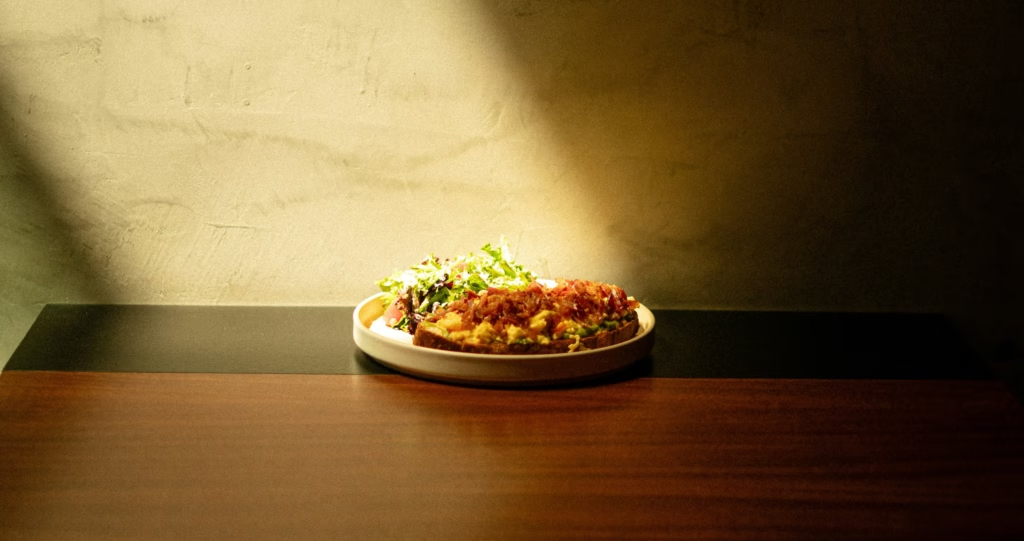
    I did have some foodstuffs in the house, but I also made a grocery order.

    Possibly the weirdest combination of foods I’ve ever ordered. I still have some of the weirder ones in the back of the pantry.

    That delivery also got me paracetamol, whatever food I could face eating (there wasn’t much) and a few vitals.

    Without that, I wouldn’t have starved, but I would have made my time while sick, and in recovery, more unpleasant.

    I also had daily checkins from a couple of people – family who live in town, my boss. People knew I wasn’t well, and could have called in for help if I wasn’t reachable.


    When to Reach Out (Even If You Don’t Want To)

    If you’re fiercely independent, this part might feel hard: sometimes you need to ask for help.

    Maybe it’s texting a friend to say you’re sick and could use a check-in. Maybe it’s asking a neighbour to bring something from the chemist. Maybe it’s calling a helpline just to talk something through.

    It doesn’t mean you’ve failed at solo living. It means you’re human—and smart enough to know that independence and support aren’t opposites.


    Final Thoughts: Prepared, Not Paranoid

    Living alone means the quiet confidence of knowing you can handle things if they go sideways. It’s not about obsessing over every possible disaster. It’s about building just enough of a plan that you can relax—and live your life knowing you’ve got your back.

    Because solo living doesn’t mean you’re alone in every sense. It just means you’re the one in charge. And you’re more capable than you think.

  • Romance Without Roommates

    Living alone doesn’t mean you’ve opted out of romance. It just means you may need to be more intentional about how it fits into your life.

    For many people, the default path for a relationship is simple: date, get serious, move in together, engagement, marriage. Some will move those steps around a bit, but that progression is so familiar that it can feel inevitable — as though sharing a home is the natural endpoint of connection.

    If you’ve come to enjoy your solitude, that endpoint might not suit you.

    That doesn’t mean you have to stay single. It means you have options.

    Photo by Dương Hữu on Unsplash

    Same City, Separate Spaces

    Many couples maintain separate homes, even in long-term, committed relationships. Sometimes it’s about work. Sometimes about finances. Sometimes about children from previous relationships.

    Sometimes it’s simply because they like having their own space.

    You can see each other often. Share meals, weekends, trips. Stay over when you want to. Then return to your own routines, your own bed, your own quiet.

    Close, But Not Cohabiting

    Some people choose to live in the same suburb — or even the same building — while maintaining separate apartments. This creates an interesting balance: proximity without permanence.

    A shared life, but not a shared fridge.

    It’s easier to spend time together, but just as easy to retreat when you need solitude.

    Long-Distance Relationships

    For those who value independence highly, long-distance relationships can work surprisingly well. Time together becomes intentional rather than automatic. Communication has to be explicit. And the periods apart preserve the space many solo dwellers rely on to recharge.

    You get closeness — without losing autonomy.

    Non-Monogamous Models

    There are also relationship structures that don’t follow the traditional, one-partner, shared-home model.

    Ethically non-monogamous relationships, for example, can allow people to maintain romantic or emotional connections without merging their entire lives into one unit. These arrangements vary widely, but they share a common thread: they’re negotiated intentionally rather than assumed.

    Shouldn’t that be the model for every relationship?

    They’re not for everyone. But they are options.

    You Don’t Have to Follow the Script

    Romance doesn’t have to look one way. It doesn’t have to move toward cohabitation, marriage, or shared finances unless that’s something you want.

    You can choose connection without choosing to live together.

    You can choose commitment without choosing to merge your lives completely.

    You can choose intimacy without giving up your solitude.

    Living alone doesn’t close the door on love.

  • Living Alone for Beginners

    Learning to Love Your Solitude

    If you’ve recently started living alone for the first time, there’s a decent chance you’ve had a moment — maybe late in the evening, maybe on a quiet Sunday afternoon — where the silence felt heavier than you expected.

    You wanted this (or maybe it’s been thrust upon you by circumstance).

    You chose this (or maybe you didn’t(.

    Either way, why does it feel so lonely?

    First: nothing’s gone wrong.

    Living alone is a transition. Even if it’s a positive one. Even if it’s something you’ve been looking forward to. You’ve moved from a life with built-in presence — someone in the next room, the background noise of another person moving through the house, a shared meal, a casual “How was your day?” — into one where all of that ambient connection is suddenly gone.

    It’s not just that you’re alone. It’s that the scaffolding has disappeared.

    Meals used to be shared by default. Now they’re not.

    Evenings used to include someone else’s presence. Now they don’t.

    Weekends used to have built-in plans, or at least company. Now it’s just… space.

    And space, when you’re not used to it, can feel empty.

    That doesn’t mean living alone isn’t for you. It means you’re learning a new way of living — one where the rhythms of your day aren’t provided by someone else’s habits or schedule.

    You’re learning how to:

    • Cook for one without it feeling pointless.
    • Watch a show without someone to react to it.
    • Fill your evenings in a way that feels satisfying rather than just distracting.
    • Sit in silence without immediately reaching for your phone.

    None of this is automatic. It takes time.

    Solitude is a skill.

    At first, the quiet might feel uncomfortable. Home might feel less like a refuge and more like a waiting room. You might find yourself wondering if you made a mistake, or if this is just something to get through until life becomes more “normal” again.

    That’s common.

    What changes things — slowly, almost imperceptibly — is the development of routines that are yours alone. Your morning coffee. Your evening walk. Your Friday kitchen reset. The music you play while you tidy up on a Sunday.

    Little rituals that give shape to your time.

    Eventually, the silence stops feeling like absence and starts feeling like peace. The space stops feeling empty and starts feeling open. Your home becomes somewhere you live, not somewhere you wait.

    You may still feel lonely sometimes. Everyone does — even people who live with partners or families.

    But living alone doesn’t have to mean living in that feeling.

    It just means you’re at the beginning of learning how to enjoy your own company.

    And like any new skill, it gets easier with practice.

  • Shaping Your Space

    When you live alone, your home doesn’t have to follow anyone else’s logic. It doesn’t need to make sense on a floor plan or look “right” to a visitor. It just needs to work for you.

    Recently, I moved my comfy armchair. Not very far, but far enough to matter. I put it in a better-lit spot, closer to the pendant lights, where evening reading feels easy rather than forced. To make room for it, I moved the sofa to in front of the TV.

    The sofa is less comfortable. After an hour or so, my butt tells me that I want to be somewhere else.

    That was the point.

    I realised I was spending more time than I wanted half-watching things I didn’t care about, simply because the comfy chair made it effortless to stay there. By shifting the furniture, I changed the default. Reading became easier. Watching TV became more intentional.

    Nothing dramatic changed. But everything felt different.

    That’s the quiet power of shaping your space.

    My main desk is in my living room. I have two desks—one for writing, one for my day job and gaming—and the main one lives where most people would put a dining table or a second sofa. That suits how I actually live. I work there. I play there. I think there.

    It wouldn’t make sense to someone else.

    It doesn’t need to.

    When you live alone, you’re free to design your space around behaviour, not convention. You can place comfort where you want more of it. You can make certain activities slightly less convenient without banning them entirely. You can let your environment gently guide you instead of relying on willpower.

    This wasn’t about productivity. It wasn’t about self-improvement. It was about alignment—making my home support the life I want to live rather than the one I drift into by default. My home wouldn’t win any design awards; it simply wouldn’t make sense for anyone else.

    That’s what shaping your space really means. Not decorating for approval, but arranging things so your days flow better.

    Your home isn’t a showroom.

    It’s a tool. A refuge. A quiet collaborator in the life you’re building.

    And when you live alone, you get to tune it—chair by chair, desk by desk—until it fits you just right.

  • Vacations Solo

    It’s easy to feel like a holiday doesn’t “count” unless someone’s there to share it with you. That the memories aren’t valid unless they come with someone else’s reaction. That the joy isn’t fully real unless there’s someone next to you saying, “Wow, look at that.”

    When you’re single, or simply living solo, that pressure doesn’t disappear. In fact, it often intensifies — especially for trips we’re culturally taught to do together: seaside weekends, city breaks, bucket-list destinations.

    The truth is, vacations feel different alone. You don’t have the shared stories. You don’t tag someone in the photo later. You might wander silently through a beautiful place with no one to narrate it to.

    Photo (cropped from) an image by Terrine Axel on Unsplash

    But here’s the thing: do it anyway.

    Go to the place you’ve always wanted to visit.

    Stay in that hotel you’ve had bookmarked for years.

    See the museum, eat the dish, follow your whims.

    Watch the sunset alone and feel every single part of it.

    Take your coffee in bed. Stay up too late watching hotel TV. Wander the streets with no one else’s itinerary to consider. Wake when you want. Rest when you want. Your pace becomes the only pace.

    Because the experience still matters — even if it’s just for you.

    And here’s a secret: you can share it with people who aren’t there. Not through obligation, but through delight. You’ll find yourself telling a friend later, and they’ll say, “Wow, you went alone?” or “You’re so brave — I could never do that.” And you’ll smile, knowing you didn’t do it to be brave. You did it because you wanted to live a bigger life, even if no one else was around to witness it.

    That doesn’t make the trip less real.

    It makes it yours.

    Vacations don’t have to be about togetherness to be worthwhile. They can simply be about you, stepping outside the familiar, giving yourself a memory that’s just for you.

    Not for the feed. Not for the story. Not for the scrapbook.

    Just because you deserve one.

  • Treat Yourself to Some Touch

    I realised, a couple of weeks ago, that it’s been months since I had physical contact with another human being that wasn’t a business handshake.

    When you live alone, it’s easy for physical touch to quietly fade out of your life. No hugs hello or goodbye, no hand on your shoulder in passing, no absentminded contact that most people don’t even notice they’re getting.

    For a while, you might not miss it. Then one day, you realise your body does. Human touch isn’t a luxury—it’s a need. It grounds us, calms the nervous system, reminds us we exist in the world.

    So how do you meet that need when you’re on your own?

    Start With Self-Contact

    It sounds small, but it matters. Massage lotion into your own hands or shoulders. Stretch. Take long, hot showers. Use a weighted blanket or soft fabrics. Run your hands through your hair. These small actions tell your brain: I’m here, I’m safe, I’m cared for.

    Bring Touch Into Your Routines

    Get regular massages if you can. Try yoga, swimming, or dance—anything that reconnects you with the physical side of being alive. Pet an animal if you have one (or borrow one from a friend for an afternoon). Even something as simple as washing dishes by hand or gardening counts; they’re all forms of sensory grounding.

    A woman getting a massage
    Photo by Toa Heftiba on Unsplash

    Seek Connection—Safely

    If you’re missing deeper human connection, it’s okay to admit that too. Hug a friend when you meet. Sit close during a movie night. Choose safe, healthy touch with people you trust. It doesn’t have to be romantic, sexual or even intimate—it’s simply about reminding your body that connection still exists.

    For me? I have a massage booked for later in the week, and on the weekend, I spent some time roughhousing with three rambunctious nephews. Good times and good, healthy contact—for me and for them.

    Touch doesn’t have to be constant to matter. A little bit of intentional contact—the kind that makes you feel alive, connected, part of something—goes a long way.

    Touch Is Not a Weakness

    Needing touch doesn’t make you needy. It makes you human. Living alone doesn’t mean living untouched—it just means you have to be intentional about how you meet that need.

    So treat yourself to some touch. In whatever way feels right. You deserve to feel held—even if, right now, it’s by your own two hands.

  • Reset Rituals

    Living alone means you don’t just set the rules for your space—you set the rhythm of your days and weeks. Without anyone else’s schedule pushing or pulling, those rhythms can drift. That’s where reset rituals come in.

    For me, resets are small, repeated actions that mark transitions—between work and rest, weekday and weekend, effort and ease. They’re not about being rigid, but about giving myself a sense of flow.

    Friday Resets

    By Friday afternoon, I close my work laptop, tear off the top page of my notebook and throw it away, and give my desk a tidy. My work desk becomes my gaming desk for the weekend, and the clutter stack shifts with it.

    Friday night, straight after work, I do a full kitchen clean. Not glamorous, but it clears the decks for the weekend. There’s nothing better than waking up Saturday morning knowing the kitchen’s ready to go.

    Weekend Resets

    Saturday mornings, I tackle whatever little bits of cleaning are most needed. Not a marathon—maybe half an hour. Just enough to keep the place ticking along without ever letting it slide too far.

    Sunday nights are another kitchen reset, deeper than the daily tidy. I also organise my daily supplements for the week, filling up one of those little pill organisers so I don’t have to think about it again until next weekend.

    Daily Resets

    Pour over filter coffee
    Photo by Gaia&Co on Unsplash

    Every morning is its own reset too. I get up and head straight into the shower. Dress, turn on the light over my writing desk, and then head to the kitchen. Coffee is always next—either stovetop espresso or a pour-over filter. While it brews, I drink half a litre of water, then take my supplements with another. By the time I sit at my writing desk with that first coffee, I’ve already reset into the day.


    Reset rituals don’t have to be complicated. They’re just small, intentional actions that mark the edges of your time. They help you clear out the old, prepare for the new, and remind you that even in solitude, your days have shape.

    There’s a comfort to these little rituals, a security to them. I can do them with minimal thought not, they’re so ritualised, so part of my routine.

    What matters most is that they’re yours—anchoring you, in your own way, in your own space.

    It’s your life. Your space. Claim it in a way that makes sense to you.

  • Microadventures for Introverts

    Adventure doesn’t have to mean backpacking across continents or throwing yourself into crowded festivals. For introverts, the sweet spot is something small, manageable, and low-pressure—a break from routine that still leaves you with energy at the end of the day.

    A microadventure can be as simple as:

    • Taking a solo train ride to a town you’ve never visited, just to wander its streets for an afternoon.
    • Packing a thermos of coffee and finding a quiet hilltop, beach, or riverside spot to sit and watch the world go by.
    • Trying a museum, gallery, or historic house you’ve walked past a hundred times but never gone inside.
    • Going for a long walk in your own city, but in a neighbourhood you rarely visit, following curiosity instead of a plan.

    The magic is in the scale—it’s something you can do without weeks of planning, without having to negotiate with anyone else’s timetable, and without returning home exhausted. You get the spark of the new without the overwhelm of a big production.

    For me, the best microadventures often happen on impulse. A sudden urge to ride out to the coast with a stop at the supermarket on the way, or just a walk into town to check out a café I’ve never tried. No social commitments, no need for a plus-one—just the freedom to follow whatever catches my attention that day.

    Big adventures have their place, but when you live alone, microadventures are a way to keep life fresh and interesting, while still honouring the quiet that fuels you.

    10 Microadventure ideas

    1. Ride to the end of the line – Take the bus, train, or ferry to its final stop just to see where it goes. No bus/train/ferry where you live? Just walk or drive somewhere you haven’t been before.
    2. Explore a “never been” neighbourhood – Walk slowly, notice the details, stop at one café or shop that catches your eye.
    3. Go museum-minimalist – Visit a small gallery or museum you’ve overlooked, even if you only spend an hour there.
    4. One-hour nature escape – Drive or walk to the nearest park, reserve, or beach, and stay until your head feels quieter. Take some water with you, and just enjoy.
    5. Sunrise or sunset watch – Pick a spot with a view and make the time to just watch it happen.
    6. Bookshop wandering – Spend an afternoon browsing, with no agenda to buy—just explore. You might consider leaving your money at home though, bookshops are dangerous.
    7. Café tourism – Try a café you’ve never visited before, even if it’s only a few blocks from home.
    8. Night-time walk – When it’s quiet, explore the streets or waterfront with the city lights as your guide.
    9. Library dive – Grab a random book from a section you never usually visit, and read it there.
    10. Micro road trip – Pick a small town within an hour’s drive and treat it like a day-long getaway.
  • Your Own Weatherproof Life

    One of the quiet luxuries of living alone is that your plans can bend to the weather without negotiation. When the forecast turns or the rainy day dawns, there’s no juggling calendars, no group chat consensus—just you, deciding what feels right.

    Rainy weekend? Pull the curtains, make something warm, and let the sound of water on the roof dictate the pace. Cold snap? Stack the blankets, keep the kettle busy, and pretend the outside world doesn’t exist. Heatwave? Move slowly, eat cold food, and let the AC hum through the whole day.

    Photo by Cole Keister on Unsplash

    No-one to comment on your choice to spend all day in your PJ’s, fluffy slippers on and not an effort to get through the shower.

    Fluffy blankets and cocoa? A day spent curled up with a good book (or a bad one, no-one to judge, you do you). Or maybe a binge of that series you’ve been meaning to get around to watching.

    You don’t have to explain, justify, or compromise. Your home becomes your shelter, your rules, your rhythm—whatever the skies are doing.

    That’s freedom.

  • The Comfort of Ritual


    Living alone doesn’t mean living without structure. Over time, you find your own quiet rituals—the ones that make the day feel right.

    When you live alone, you start to build your days around small moments that matter only to you. They’re not traditions you have to share, or routines shaped by someone else’s preferences. They’re yours—quiet anchors that give your life rhythm.

    For me, it’s the morning coffee at my writing desk. My mornings start with a shower, then I head downstairs and make a coffee.

    What coffee exactly? Some morning, it’s a Japanese style filter. Others, it’s a classic stovetop espresso. Either way, it’s not a rushed takeaway on the way to somewhere else, but the slow ritual of making it, setting it down beside the keyboard, and taking that first sip while the day is still unfolding.

    Later in the day, it’s the laptop on my knees, writing in front of the TV late at night. No one to complain about the blue glow or the clack of keys, no one to ask me to pay attention to the show, or ask what I’m working on.

    Photo by Lee Campbell on Unsplash

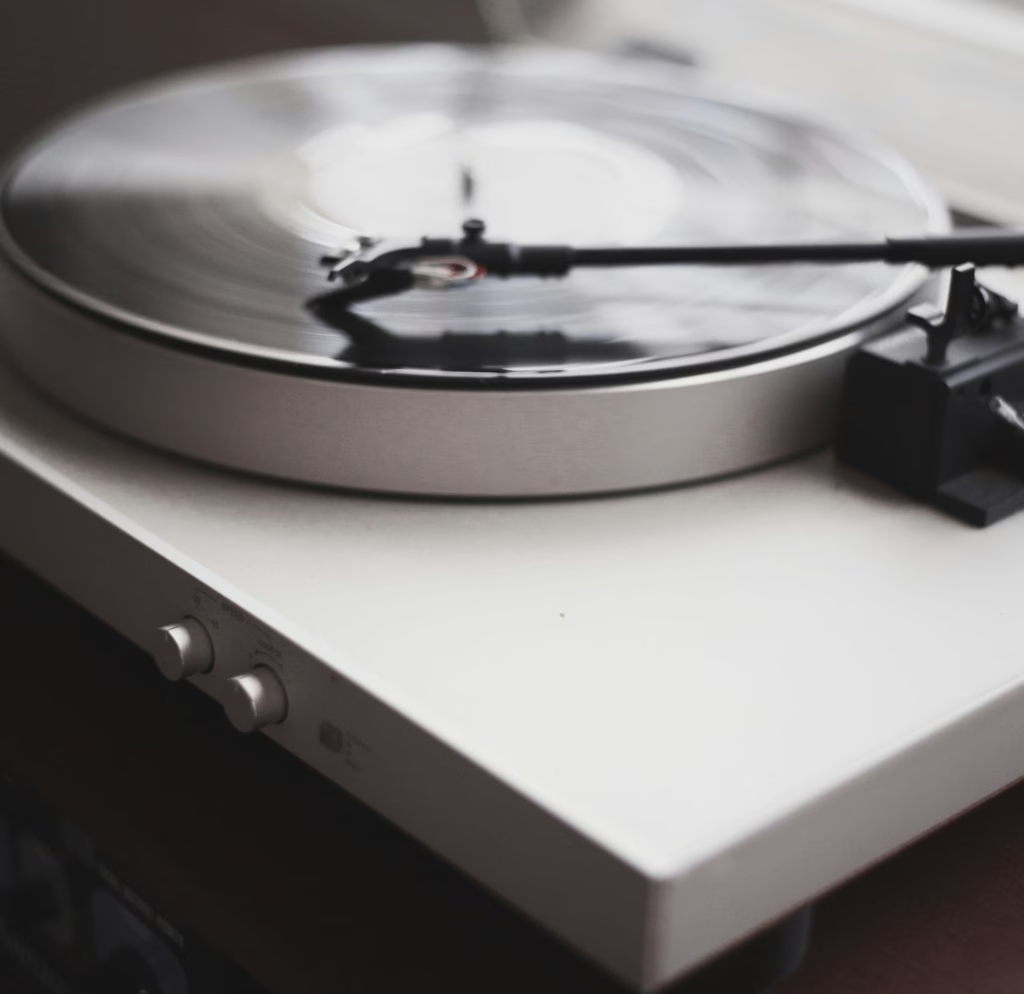
    Weekends, it’s dropping the needle on a Jesus and Mary Chain record—or maybe something from KMFDM—while I do my Sunday housework. The bassline rattling the windows, loud enough to overwhelm the vacuum cleaner’s humming, the satisfaction of knowing I’ve done enough for the place to feel right again.

    When energy levels are high, it’s standing at my work desk with a bass guitar slung across my back, an amp by my feet, letting a few notes ring out while I think something through, a few snarls or a smooth 12 bar while I’m decompressing between tasks. A habit that would seem absurd in a shared office, but here, it’s just part of the day.

    Rituals don’t have to be grand. They just have to be yours. In solitude, these little patterns become more than just habits—they’re proof that your life has shape and meaning, even in the quietest moments.

    Every one of those examples above? They’re mine. They work for me.

    If you’re living alone? Find the small, steady rituals that make your solo life yours.

    What are yours?

Search

Proudly powered by WordPress